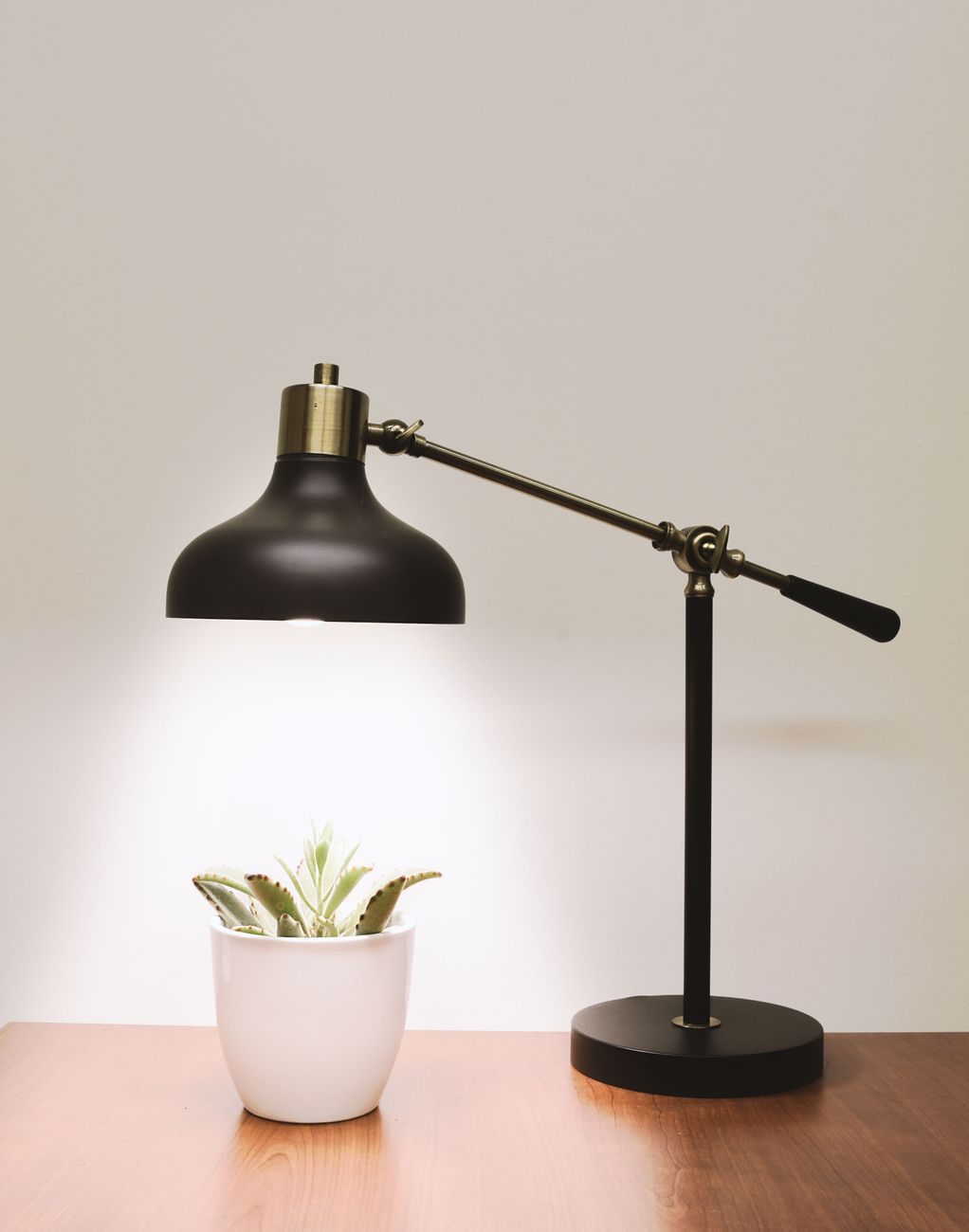
A single, well-chosen lamp will do more for a living room at night than six recessed downlights and an overhead fixture combined. A “good lamp” here means three things in combination: a fixture placed at table or floor height — never the ceiling — paired with a 2700K bulb at 90+ CRI, and dimmable down to candlelight range. Get those three right and the math works out to about 600 lumens of warm, well-rendered light at eye level, which is what your eyes actually want after dark. Get any of them wrong and even a $1,200 lamp produces gymnasium light. The argument that follows is mostly about how to get those three right, and which fixtures are worth living with at three different budgets.
The case is straightforward. Most overhead lighting is gymnasium lighting masquerading as residential. Switch it off after sundown, replace it with one warm, high-CRI lamp at eye level, and the room changes character before you’ve spent another dollar. Then, when you do spend, spend it on the lamp.
The dinner-party diagnostic
If you have ever stood in your own living room with every light on at 9 p.m. and felt the room go flat, that is the diagnostic. Recessed downlights are hospital lighting. The pendant over the dining table, on its own at full output, is hotel-bar lighting. The ceiling fixture in the bedroom, when used as the sole light source, is casino lighting. None of these were designed for the room to be lived in after dark — they were designed for the room to be cleaned, photographed, or moved through.
A well-lit room at night has at least three things going on, and none of them are coming from the ceiling. There is a primary pool of warm light somewhere between knee and shoulder height — almost always a lamp. There is a smaller secondary source: a candle, a wall sconce on a dimmer, a picture light. And there is the absence of light in the corners. The dark parts of the room are not a problem to solve. They are what makes the lit parts feel intentional.
The reason this works is geometry. Light from above flattens faces and surfaces because everyone is used to reading dimension from side-lit shadow — sunlight at four in the afternoon, a candle on a table, a window. Light from above only happens at noon, and the body reads it as “outside, doing things,” not “inside, resting.” A lamp at table height restores the angle the room expects.
What does “good” actually mean in a lamp?
There are exactly four numbers worth knowing before you buy. Memorize these and you can shop for a $90 lamp or a $1,400 lamp on the same terms.
Color rendering index (CRI), aim for 90 or higher. This is the single number most homes get wrong. Sunlight is 100; a generic bargain-bin LED bulb is 78–82. Below 90, your wood floors look slightly grey, your skin tones drift sallow, and oil paintings look like they were printed in a magazine. Above 95 is where the difference becomes uncanny — surfaces look the way they look outdoors. Premium bulbs (we’ll get to them) hit 95+ at a real cost premium. Pay it once.
Color temperature, 2200K to 2700K for any room you sit still in. Lower is warmer. 2700K is the firelight end of incandescent; 2200K is candlelight; 3000K is what cheap “warm white” actually delivers and is already too cold. Anything 3500K and above belongs in a kitchen, garage, or bathroom mirror — never in a room where the goal is to slow down. If you remember one number from this piece, remember 2700K.
Lumens, 400 to 800 per task lamp. Lumens are the only honest measure of brightness; wattage is now meaningless because LED efficacy keeps climbing. A reading lamp wants about 600 lumens at the bulb. A side-table mood lamp wants 350–450. The “60-watt equivalent” you grew up with is roughly 800 lumens, which is more than you want past 8 p.m.
Dimmability, non-negotiable, and dim-to-warm if you can. A lamp that does not dim is a lamp that will be wrong half the time. Standard dimming drops the lumens but keeps the color temperature; dim-to-warm drops the lumens and slides the color temperature toward 1800K as it goes down, mimicking the behavior of a candle or an incandescent filament. Once you have lived with dim-to-warm in a primary lamp, you will not give it up. Worth a $40 premium on the bulb side or a $200 premium on the lamp side, no further argument.
The Pinterest aesthetic of bright cool-white open-concept kitchens, photographed at 6500K to look “clean,” is a photography choice, not an interior-design one. Real rooms photographed at 2700K look orange on the camera roll and correct in person. This is a calibration problem, not a lighting one.
The four numbers, in a table you can take to the lighting aisle:
| Metric | Target range | Why it matters |
|---|---|---|
| CRI | 90+, ideally 95+ | Color rendering — skin, wood, food look correct |
| Color temperature | 2200–2700K | Anything 3000K+ reads cold once your eyes adjust |
| Lumens (task) | 400–800 at the bulb | More than 800 past 8 p.m. is too much |
| Dimming | Required; dim-to-warm preferred | A fixed-output lamp is wrong half the time |
Three lamps we’d actually live with
Three picks across three budgets. Each meets the four criteria above; each survives the harder test of looking right turned off, which is when a lamp spends 90 percent of its life. We have flagged the affiliate relationships on each link.
Entry — IKEA TÄRNABY, around $80
A compact table lamp with a brushed-brass base and a frosted glass shade that diffuses light evenly in all directions. The shade does the work that more expensive lamps charge $300 extra for: it eliminates the bare-bulb glare that ruins most budget lamps. The brass is real-feeling rather than gold-painted plastic, and the inline dimmer on the cord is the rare IKEA touch that punches above its price.
The shortcomings are honest. The base is lighter than it looks (knockable), the cord is short (35 inches), and the fabric on the shade can yellow over years if it sits next to a kitchen. None of these are dealbreakers for an apartment console or a guest bedroom.
Pair it with a 600-lumen, 2700K, 90+ CRI bulb. With a Cree or Soraa filament E26, you are at about $105 total for a lamp that does not embarrass.
Mid — A Lamps Plus exclusive in the $300–500 band
This is the bracket where most living-room buyers should land. Lamps Plus carries its own exclusives at this price — typically a turned-wood or solid-brass base with a high-quality fabric drum shade — that compete directly with $800–1,000 designer pieces on materials and assembly quality. The advantage of going through Lamps Plus rather than direct-to-consumer brands at this tier is selection: they stock the long tail of finishes (oil-rubbed bronze, antique brass, walnut, cream linen) that direct brands have stopped offering.
Look for: solid (not hollow) metal base, fabric shade with white inner liner (this is the part that controls glare), three-way socket if you can find one, and a UL-listed inline dimmer. Skip anything advertised as “smart” at this price — the dimming circuits in budget smart sockets are noticeably worse than a mechanical dimmer on a good bulb.
Heirloom — Visual Comfort, Robert Abbey, or Schoolhouse, $900–1,400
The case for spending here is straightforward: a $1,200 lamp from any of these three brands will be the same lamp in twenty years, with the same finish, the same socket, the same cord routing, and the same shade options. Visual Comfort’s Bryant series (designed by Thomas O’Brien) is the unofficial industry default for editors and stagers because it is correct in almost every room. Robert Abbey’s Real Simple line by Jonathan Adler hits a similar mark with more personality. Schoolhouse’s Isaac series leans more American-craft.
What you are paying for: solid brass throughout, hand-finished metalwork, shades that are rewired or replaced rather than discarded, and parts availability for repair (Visual Comfort will ship you a new socket assembly for free, ten years in). You are not paying for a brand cachet you cannot pass on — none of these brands have meaningful resale value — so do not buy them as an investment. Buy them as the only lamp you intend to own for that room.
The bulb is the lamp
The most undervalued $20 you can spend in lighting is the second-best bulb. A $600 lamp with a generic 80-CRI 3000K bulb in it is a $600 lamp performing like a $90 one. A $90 lamp with a 95-CRI dim-to-warm bulb in it is a $90 lamp performing like a $400 one. The bulb is doing most of the work most of the time.
Three bulbs worth knowing:
- Soraa Vivid 95+ A19, around $30. The reference standard for residential CRI. 95+ CRI, 2700K, 800 lumens, dimmable on standard dimmers. The light it produces has a slight warmth bias that flatters skin and wood. Run these in any lamp you sit near.
- Philips Hue Filament E26 vintage, around $35. Smart bulb that hits 90+ CRI, dim-to-warm down to 2200K, and is properly tunable through an app or HomeKit. Worth it specifically for the dim-to-warm behavior on a primary lamp. Skip the rest of the Hue ecosystem; the filament line is the only Hue product that earns the premium.
- Cree TW Series A19, around $15. A workhorse 93-CRI 2700K bulb that costs half what Soraa does and does 80 percent of the job. Buy these for the lamps in rooms you walk through rather than sit in.
A pro tip nobody mentions: pair any of these with a Lutron Caséta in-wall dimmer ($60) if you have a hardwired lamp circuit. The Caséta is the only dimmer that does not cause the soft hum that most LED bulbs produce on cheap dimmers.
Living with one lamp
The end of this conversation is not a shopping list. It is an evening protocol.
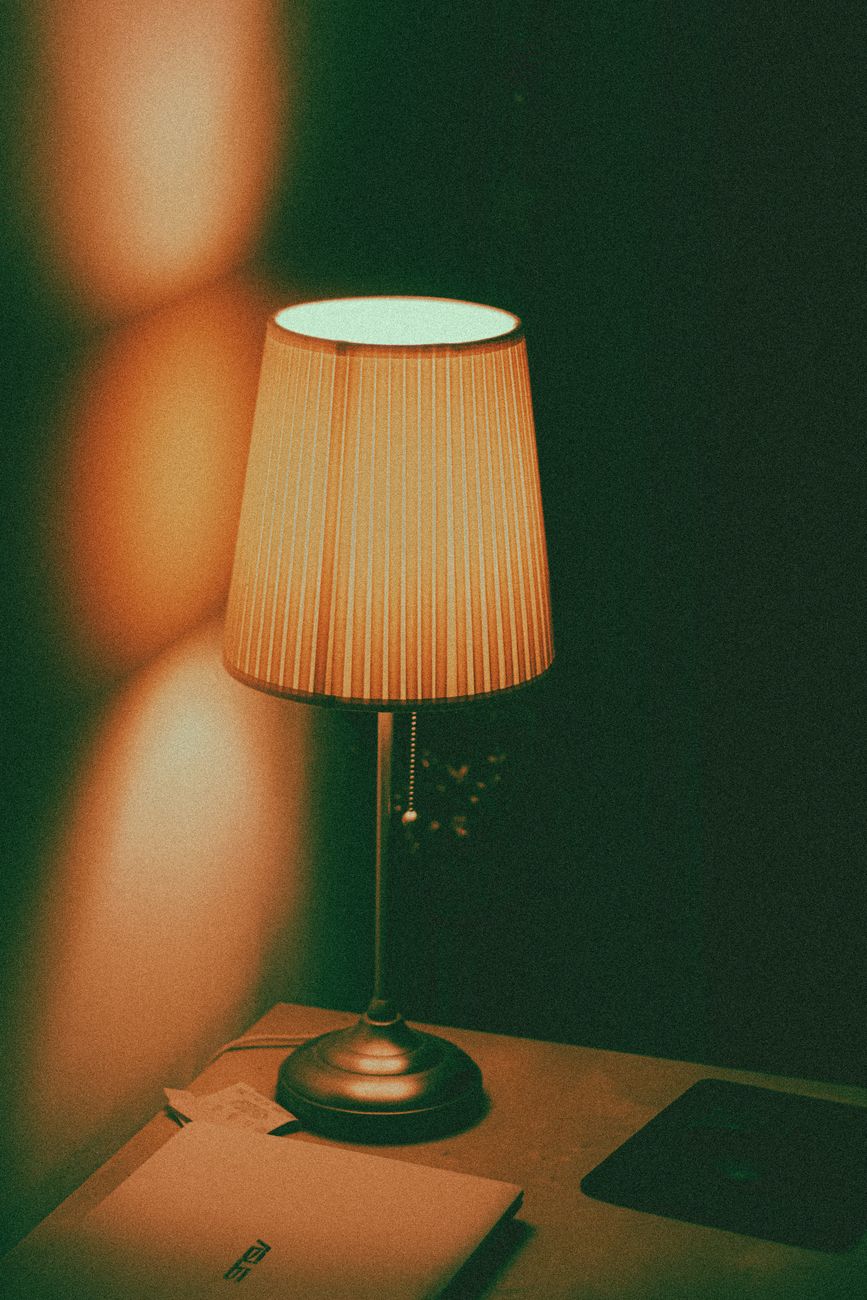
After dark, overhead lights off. One primary lamp on, at about 60 percent. A candle, preferably real, on the table you are sitting at. That is the room. The corners stay dark. The walls fade. The book or the conversation pulls focus because the geometry of the light makes it pull focus. This is not deprivation; it is intention. The room gets quieter with less light, not more.
It will feel underlit for the first week. By the third week, it will be the room you walk into expecting to relax in, and the overhead-lit version will look — correctly — like a room someone is cleaning.
One good lamp, in other words, is not really about the lamp. It is about deciding the room is for being in, after sundown, rather than for performing in. The lamp is just the part of that decision you can buy.
Frequently asked questions
Can I really light a living room with just one lamp? For evening use, yes — a single 600-lumen lamp at table height, paired with one secondary source (a candle, a sconce, the glow from a kitchen pass-through), is enough for sitting, conversation, and reading. For task work like cleaning or hosting a board game, add a second lamp. The goal is to never need the overhead light after 7 p.m.
What’s the difference between CRI and color temperature? Color temperature is the color of the light (warm to cool, measured in Kelvin). CRI is how accurately the light renders all other colors (measured 0–100). A 2700K bulb at 80 CRI and a 2700K bulb at 95 CRI both look “warm white,” but the 95-CRI bulb will make your skin, food, and wood look correct, while the 80-CRI bulb will make them look slightly off in ways you cannot quite name.
Are smart bulbs worth it for ambience? Only the dim-to-warm ones, and only on a primary lamp. The rest of the smart-bulb category solves problems most homes do not have. If you already use HomeKit or Hue, the filament line is genuinely worth the premium for the way the warmth slides as the brightness drops. Otherwise, a dimmable 95-CRI bulb on a mechanical dimmer is 90 percent of the benefit at 30 percent of the price.
Is dim-to-warm worth paying for? Yes, on one lamp per room — the one you actually sit near. Dim-to-warm replicates the way real flame loses both intensity and color temperature as it fades; standard dimming only loses intensity, which is why a normal LED at 20 percent still looks slightly cold. You will not notice this consciously; you will only notice that the room feels right.
How many lamps should a small living room have? Three light sources is the working minimum: one primary lamp (the one with the good bulb), one secondary (a table candle, a small picture light, a corner sconce on a dimmer), and one optional accent (a reading floor lamp by a chair, used only when in use). Not “three lamps lit at once” — three sources you can switch on and off independently.
Why do my photos look orange under my warm bulbs? Camera white balance is set for daylight by default. Warm-bulb rooms are 2700K, daylight is 5600K, so the camera renders the room shifted orange. Switch your phone camera to “auto white balance” or “tungsten” mode, or shoot in RAW and correct later. The room is not the problem; the camera is.
Read next
- Our editorial approach — how we evaluate before recommending.
- Affiliate and editorial disclosure — what we earn from what.
- More on lighting, coming soon.