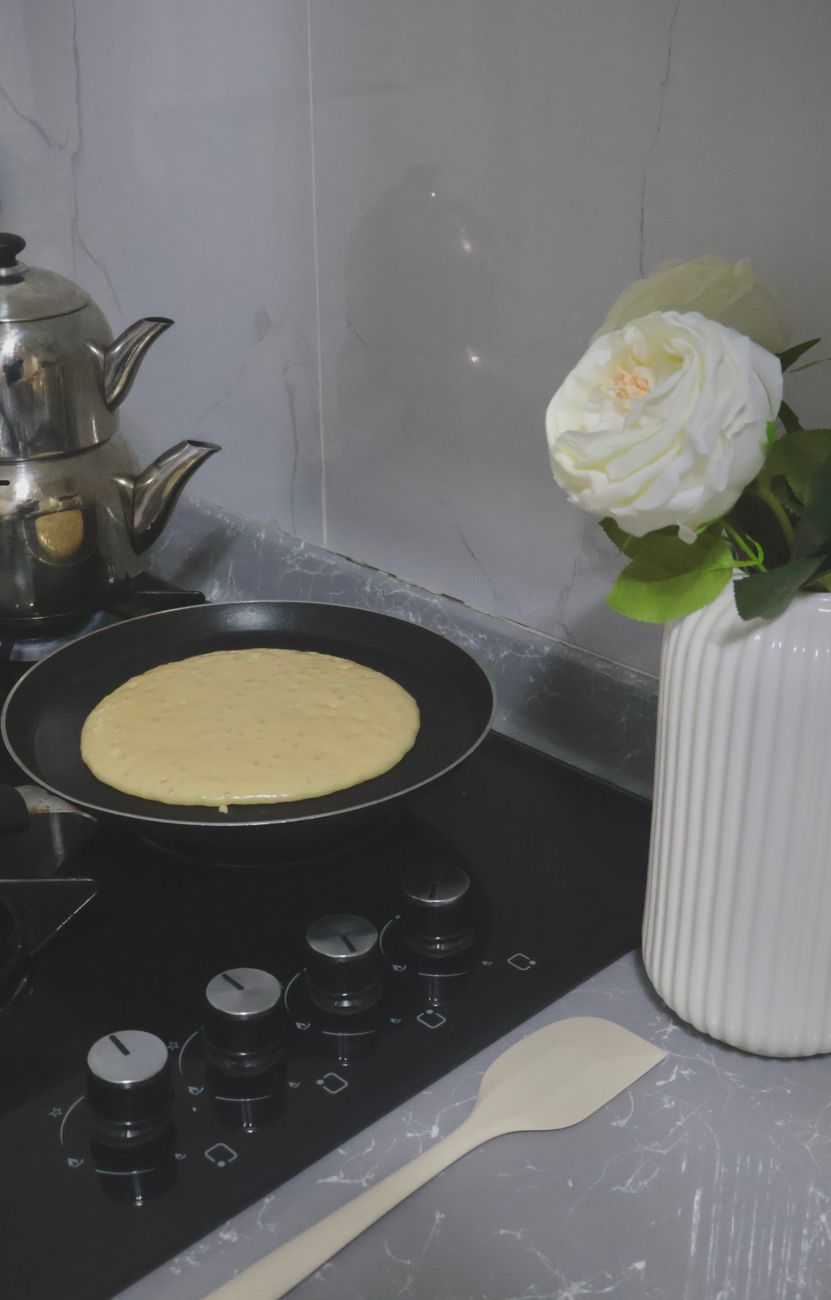
One good pan replaces eight pieces of a starter cookware set
A “good pan” here means a 10- or 12-inch flat-bottomed skillet with sloped sides, in a material that survives both stovetop and oven, paired with a tight-fitting lid. Get those three things right and the same fixture sears a steak, sweats onions, finishes a frittata under the broiler, simmers a curry, and roasts a sheet-pan-sized dinner in about 14 inches of cabinet space. The average American household owns 12 to 15 cookware pieces and uses two or three of them for roughly 80 percent of meals. A single 10-inch pan in cast iron, ceramic-coated aluminum, or tri-ply stainless does the work of the eight pieces a starter set ships with — at a per-piece cost of $30 to $400 depending on tier, and at a per-year cost (across 10–25 years of life) that beats every twelve-piece “starter set” on the market. The argument that follows is the math, the materials, and the three pans worth living with.
Why most kitchens are over-equipped
The starter cookware set is the dinner-party version of the overhead light. Both of them solve the easier problem — getting a room (or a kitchen) from zero to functional — at the cost of solving the harder one. The harder one is that 90 percent of home cooking is variations on the same two or three techniques: searing, sautéing, simmering. A kitchen optimized for those three techniques needs roughly two pans and one pot. A kitchen sold to a new homeowner ships with twelve pieces because twelve is what fits in a gift-set box, not because twelve is what gets used.
The case for one good lamp is that a single warm, well-rendered light at table height does more for a room at night than six recessed downlights. The case for one good pan is structurally the same. The single, well-chosen fixture solves the actual problem; the multi-piece set solves the marketing problem of needing to look complete on a wedding registry. Five of the twelve pieces in a standard set — the 8-inch fry pan, the 1.5-quart saucepan, the steamer insert, the egg poacher, the second small fry pan — duplicate work the 10-inch pan already does better.
The harder question is which 10-inch pan. That is what the rest of this piece is about. The pan you choose will be the most-used piece of equipment in your kitchen for the next 10 to 25 years; spending a long evening on the decision is correct. The starter set, by contrast, asks you to decide twelve times and then live with twelve compromises.
What does “good” actually mean in a pan?
There are four properties worth knowing before you buy. Get these right and you can shop for a $40 cast iron skillet or a $400 stainless one on the same terms.
Heat capacity and conduction, in that order. The pan needs to hold heat (so the surface temperature does not crash the second a cold steak hits it) and distribute heat (so the center and the edge cook at the same rate). Cast iron is the heavyweight champion of heat capacity but slow to react. Tri-ply stainless balances both. Thin stamped aluminum has neither and is the reason most $30 frying pans cook unevenly. Aim for 3–5 mm of bottom thickness in any material; thinner than that and the pan warps within two years.
Surface, with eyes open about lifespan. A non-stick surface fails eventually — every coating does, including ceramic. The honest question is how it fails. Traditional PTFE non-stick (Teflon-style) fails by losing release performance over 1–3 years and by releasing fumes if overheated past 500°F. Ceramic non-stick fails the same way but at a slower rate and without the fume concern. Cast iron and stainless do not have a coating to fail; they get better with use as the surface seasons or learns to release with proper heat management.
Oven-safe to 500°F. A pan that cannot go from stovetop to oven is missing half its value. The frittata-into-broiler move, the sear-then-roast move, the bread-in-skillet move — none of them work in a plastic-handled pan. Look for stainless or all-metal handle, no glued-on rubber, oven-safe rating of at least 450°F (500°F is better).
Weight you can lift one-handed when full. A 10-inch cast iron skillet full of food weighs 6–8 lbs. A 10-inch ceramic-coated aluminum pan full of the same food weighs 3–4 lbs. Both are correct answers; the wrong answer is buying a pan you cannot maneuver. If you cook standing for an hour, you will notice the weight by the second meal. Cast iron rewards the strong wrist; ceramic and aluminum reward the kitchen with shelves above shoulder height.
The four materials, in one table:
| Material | Heat capacity | Heat distribution | Surface lifespan | Oven-safe | Weight (10-in) | Best for |
|---|---|---|---|---|---|---|
| Cast iron | Excellent | Slow, even | Lifetime (seasons in) | Yes, to 700°F | 5–6 lbs | Searing, baking, low-and-slow |
| Tri-ply stainless | Good | Fast, even | Lifetime | Yes, to 600°F | 3–4 lbs | Fond, deglazing, acidic sauces, induction |
| Ceramic-coated aluminum | Moderate | Fast, uneven | 3–5 years | Yes, to 450°F | 3–4 lbs | Eggs, quick sautés, daily driver |
| PTFE non-stick (Teflon) | Low | Fast | 1–3 years | Often no | 2–3 lbs | Avoid as a primary pan |
The table also explains why most “best cookware” lists are evasive about which pan to buy. The honest answer is that there is no single material that wins on every metric — the question is which trade-off you can live with. We think the right trade-off for most kitchens is ceramic-coated aluminum as the daily driver, with cast iron as the heirloom backup. The reasoning is below.
Three pans we’d actually live with
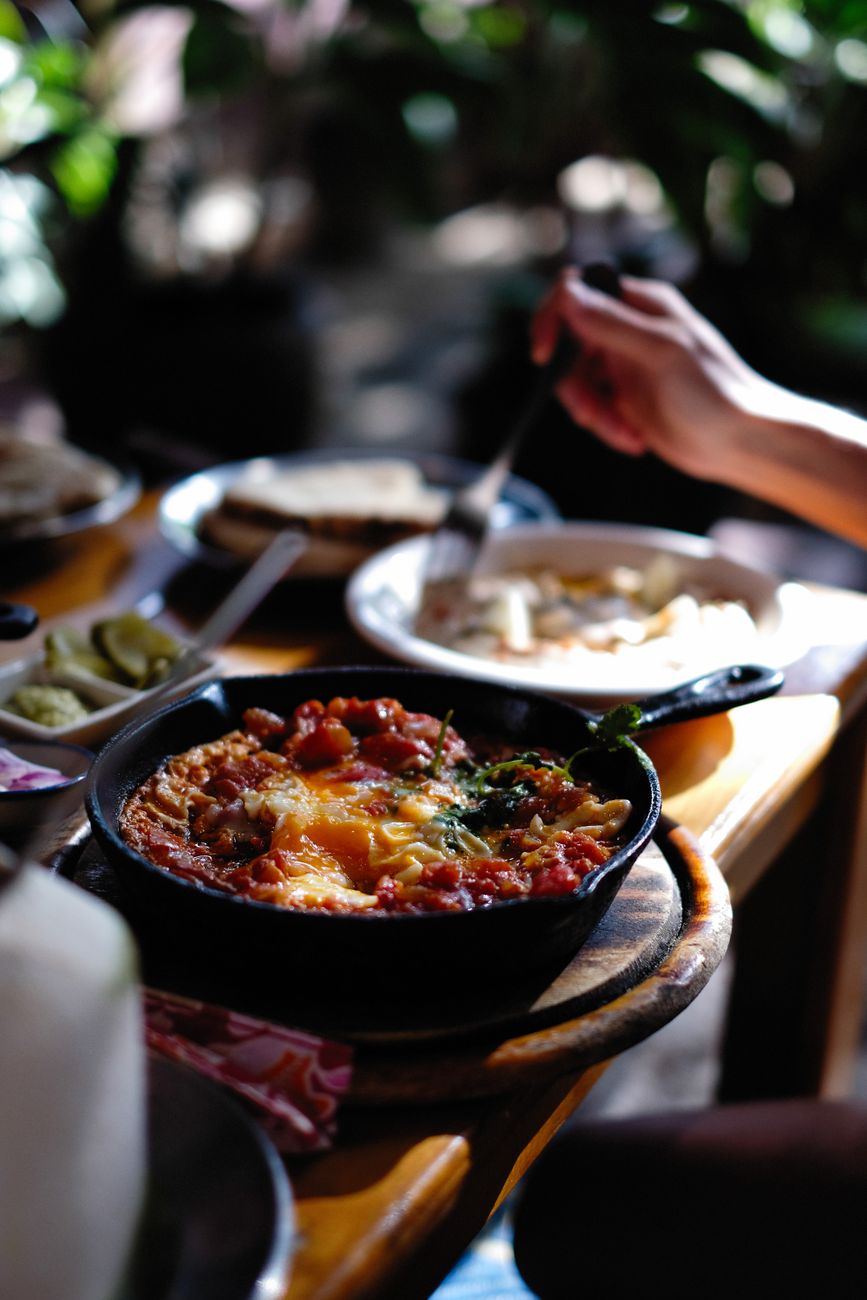
Three picks across three budgets. Each is a true single-fixture solution: each can sear, sauté, simmer, and finish in the oven without a second pan helping out. The affiliate state on each link is flagged honestly.
Entry — Lodge 10.25-inch cast iron, around $30–45
The Lodge 10.25-inch is the closest thing to a no-decision purchase in any kitchen category. It is heavy (5.5 lbs empty), pre-seasoned, oven-safe to any temperature your oven goes to, and survives indefinitely with the kind of care a wooden cutting board needs. A factory-second Lodge from the company’s seconds outlet runs $20–30 and is functionally identical to the $45 version — the cosmetic flaws sand off in the first six months of use.
The shortcomings are real and worth saying out loud. It is heavy enough that some cooks will not enjoy maneuvering it; the seasoning takes 60–90 days of regular use to feel genuinely non-stick; and acidic sauces (tomato, wine, citrus) strip the seasoning if simmered for long stretches. None of these are dealbreakers if you cook three or more times a week. All of them matter if cast iron will be your only pan.
Pair it with a $20 silicone handle cover and a $15 chainmail scrubber. Total kit cost under $80 for a pan that outlives most marriages.
Mid — Our Place Always Pan 2.0, $155
This is the bracket where most one-pan buyers should land, and the pan that most directly embodies the argument of this piece. The Always Pan 2.0 is a 10.5-inch ceramic-coated aluminum skillet with sloped sides, a tight-fitting glass lid with a strain spout, a steamer insert that sits flush, and a beechwood spatula that nests in the handle. Our Place markets it as replacing eight pieces of cookware; the marketing is correct because the geometry is correct — a 10.5-inch sloped-side pan with a lid replaces a fry pan, a sauté pan, a saucepan, a steamer, a skillet, a saucier, and (with the lid on) a small Dutch oven.
What you are buying: a ceramic non-stick surface free of PFOA, PFOS, lead, and cadmium; an oven-safe rating of 450°F (handle included); a cast aluminum body that distributes heat fast and reasonably evenly; and a single fixture that handles 80 percent of weekday cooking. The honest trade-off is the 3–5 year ceramic lifespan — after that, the pan needs replacing or relegating to lower-temperature tasks. At a 4-year average lifespan, the per-year cost is about $39. The Lodge runs cheaper per year; almost nothing else does.
We recommend this as the primary pan in any kitchen where weight is a factor (small apartments with high shelves, cooks with wrist issues, anyone moving every 2–3 years). It is also the pan we recommend for households that want one fixture instead of three.
Heirloom — All-Clad D3 12-inch stainless, $300–500
The case for spending here is identical to the case for an heirloom lamp: a $400 pan from All-Clad will be the same pan in twenty years, with the same handle, the same bonded layers, and the same surface — because stainless does not have a surface that wears out. The D3 is three layers (stainless, aluminum core, stainless) bonded across the bottom and the sides, which is the difference between this and most “tri-ply” pans that bond only the bottom. The side bonding matters because the side of a 12-inch pan is where the fond builds and where sauces reduce.
You are paying for: lifetime dishwasher safety (do not actually put it in the dishwasher, but you can), induction compatibility, oven-safe to 600°F (handle included), and a 25- to 50-year usable life that the company will repair or replace for life under their household warranty. You are not paying for non-stick performance, which is the trade-off — eggs in stainless require either fat or a heat-management technique most cooks learn within a month.
The D3 12-inch is the pan we recommend as the second pan in a kitchen that already has a Lodge or an Always Pan, and as the only pan in a kitchen where the cook is willing to learn stainless. Either way, it outlives the cabinet it sits in.
How to cook five things in one pan
The pan in front of you only earns the title “one good pan” if it can do five distinct things across the week. The list below is the working repertoire — five techniques that exercise the full range of a 10–12 inch skillet with a lid. Run through all five in the first month and the pan stops feeling like a compromise and starts feeling like a system.
- Sear and rest. Heat the pan empty for 2–3 minutes over medium-high until a drop of water dances and disappears in under 5 seconds. Add 1 tbsp of high-smoke-point oil (avocado, refined sunflower). Lay the protein down, leave it alone for 4 minutes, flip, 3 minutes. Move to a board, rest 5 minutes while the pan deglazes with broth or wine for a pan sauce.
- Sweat and braise. Drop the heat to medium-low. Onions, garlic, aromatics in 1 tbsp fat, lid on. After 8 minutes, the onions are translucent; add liquid (stock, tomato, wine), the protein back in, lid on, low heat for 25–40 minutes. The pan becomes a small braising pot.
- Sauté. Medium-high, fat in the pan, vegetables in batches small enough that the pan is never crowded. The rule is “if you can hear the food sizzling, the temperature is right”; if the pan goes silent, the heat is too low or there is too much food in it.
- Finish in the oven. Preheat to 425°F. Sear the protein 3 minutes per side, move the whole pan to the oven for 8–14 minutes depending on thickness. A skillet-roasted chicken thigh is the proof-of-concept dish for any one-pan cook.
- Bake. Cornbread, skillet brownies, dutch baby pancakes, deep-dish skillet pizza. The pan goes from stovetop to 400°F oven with no changeover. Cast iron is the heavyweight here; ceramic and stainless both work for shorter bakes.
Two notes on care that apply across all three pans above. Hand-wash with hot water and a soft brush; the dishwasher is fine for stainless and ceramic but shortens the life of every coating and strips cast iron seasoning. Dry on a low burner for 30 seconds before storing; trapped moisture is the enemy of every cooking surface.
Living with one pan
The end of this piece is not a shopping list. It is a kitchen habit. After dark, the evening lighting routine has the lights down to one warm source; on the stove, one warm pan is doing the same work. The kitchen has a single fixture in active use and the rest of the cabinet is closed. This is not deprivation — it is the same logic that made one lamp better than six downlights, applied to the room next door.
A few things change once a kitchen runs on one pan:
- The drawer of utensils shrinks. One spatula, one wooden spoon, one pair of tongs. The other six were duplicates that supported the other pans you no longer own.
- The grocery list gets simpler. One-pan cooking favors techniques over recipes, and techniques use fewer ingredients per meal.
- The cleanup is one item. A pan, a board, a knife, a plate. Most weeknight dinners now take under 12 minutes of active work and 5 minutes of cleanup.
- The pan becomes the room. The Lodge or the Always Pan or the All-Clad lives on the stovetop, not in a cabinet. It is visible, used, and slowly becomes the most-touched object in the house.
If you have not yet read the case for one good lamp, the kitchen version of the argument lands harder if you have already accepted the living-room version. The two pieces are the same piece, applied to different rooms. One warm fixture, intentionally chosen, used until it outlives the cabinet it sits in. That is the case in twelve words.
Frequently asked questions
Which pans should you stay away from? Avoid PTFE non-stick (Teflon-style) for any pan you intend to use above medium heat or for more than 1–2 years — the coating breaks down with high heat and the release performance falls off a cliff within the first 1,000 uses. Avoid stamped aluminum without a stainless or ceramic clad layer; it warps, hot-spots, and cannot go above 400°F. Avoid copper-plated pans sold as “copper pans” — almost all of them are aluminum with a copper-colored coating, not actual copper. The honest options are cast iron, tri-ply stainless, real copper (rare and expensive), and ceramic-coated aluminum.
What is the #1 rated cookware? There is no single #1 — the question depends on what role the pan plays. For an heirloom daily driver, All-Clad D3 or D5 in stainless is the most-cited editor pick across Wirecutter, Serious Eats, and America’s Test Kitchen. For an entry-level workhorse, Lodge cast iron is the consensus answer. For a single-fixture replacement that consolidates eight pieces, Our Place’s Always Pan 2.0 is the category-defining product. Pick the pan by the role; the brand follows.
What is the healthiest frying pan to buy? A ceramic-coated aluminum pan with a third-party-certified PFOA/PFOS/lead/cadmium-free coating is the healthiest mainstream option for daily use — Our Place, Caraway, and GreenPan all meet this standard. Cast iron and tri-ply stainless are functionally health-neutral (no coating to release anything; cast iron adds trace iron, which is generally considered beneficial). The least healthy options are old PTFE non-stick pans (manufactured before 2015) and any pan with a flaking or scratched coating, regardless of material.
What pans does Gordon Ramsay actually use? Across his restaurant kitchens, Ramsay’s teams cook on a mix of De Buyer carbon steel (for high-heat searing), All-Clad and Mauviel copper-core stainless (for sauce work), and traditional cast iron for slow cooking. In his own home kitchen, photographed for press multiple times, the standout is a HexClad hybrid pan (Ramsay is a brand partner) and a set of Scanpan ceramic non-stick. Professional kitchens rarely use a single pan for everything; home kitchens can, which is the asymmetry this piece is built on.
Can one pan really replace a full cookware set? For roughly 80 percent of home cooking, yes — sear, sauté, simmer, braise, and bake all work in a 10–12 inch skillet with a lid. The remaining 20 percent (boiling pasta water, stockpot work, double-boiler tasks, deep-frying volumes) needs a second piece — usually a 4–6 quart pot or Dutch oven. A two-piece kitchen (one good pan + one good pot) handles 99 percent of home meals. A twelve-piece set is solving for a household that does not exist.
How long should a good pan last? By material: cast iron, indefinitely with care (50+ years is normal, with seasoning rebuilt as needed); tri-ply stainless, 25–50 years (and the major brands replace under lifetime warranty); ceramic-coated aluminum, 3–5 years of primary use, then 5–10 more as a lower-stakes pan; PTFE non-stick, 1–3 years of useful life before performance falls off. The per-year cost of a $300 stainless pan over 30 years ($10/year) is lower than the per-year cost of replacing a $35 non-stick pan every 2 years ($17.50/year).
Read next
- The case for one good lamp — the same argument, applied to the living room.
- The evening lighting routine — the kitchen at dinner is part of this protocol.
- Our editorial approach — why we evaluate by years of use rather than launch-day specs.
- Affiliate and editorial disclosure — what we earn from what.