The 30-year plan for one cast iron skillet, in four rules
A “30-year plan” for a cast iron skillet is not a maintenance schedule. It is the shift from thinking about the pan as something you own into something you are maintaining for the next generation. Get four things right and the same $40 pan turns into a $300 heirloom in a decade, and a family artifact in three. First, cook with fat in the pan for the first month — every meal, no exceptions — until the seasoning stops feeling matte and starts feeling glossy. Second, hand-wash while still warm with hot water and a chainmail scrubber; soap is fine if the seasoning is mature (year 2+), avoid it in the first year while the polymer layers are still building. Third, dry on a low burner for 30 seconds after every wash and rub a thin coat of neutral high-smoke-point oil into the surface. Fourth, cook acidic foods (tomato, wine, citrus) sparingly in year 1, freely by year 3, and don’t worry about it after year 5. Do those four things for 30 years and the pan will outlive the cabinet it sits in, the kitchen you replaced last decade, and possibly the house.
Why cast iron is the only cookware that appreciates
Every other piece of cookware in your kitchen depreciates from the moment it leaves the store. A $155 ceramic non-stick pan is worth $80 after 18 months, $40 after three years, and $0 after five. A $250 stainless piece holds its value slightly better because there is no coating to fail, but the resale market is still soft — a used All-Clad on eBay sells for 40 percent of retail. Cast iron is the opposite. A 1930s Griswold No. 8 in decent condition sells for $150–300 on eBay today; a 1900s Wagner Ware for $200–400. New Lodge classics sell for $30–40. The math is: cast iron gets more valuable with age, which is unique in kitchen goods and rare across all household categories.
The reason is the seasoning. A polymerized-oil surface is not something a factory can ship — it can be started (pre-seasoning) but it is built by use. A 20-year-old skillet that has been cooked in twice a week has a glossy, slick, dark surface that outperforms any factory finish. That surface is what the market pays for. The same argument in the case for one good pan was about buying one good pan; the case here is about keeping the one you have.
Two related economic facts. First: the per-year cost of a $40 Lodge skillet across a 30-year life is $1.33 — the lowest per-year cost of any kitchen fixture, including the wooden spoon. Second: the per-hour maintenance cost of that skillet is about 60 seconds of care per meal cooked, roughly 100 minutes of care per year at 2 uses per week. That is less time than the dishwasher cycle on a pan that would otherwise be replaced every 4 years.
What “care” actually means, day by day
Cast iron care is not about deep-cleaning after a mistake. It is a set of five small habits that take under 90 seconds each and that, done consistently for 30 years, produce a fixture that outlives you. There is a live debate between Lodge’s “soap is fine” school and Field Company’s “no soap ever” school; both work, and we lay out the actual difference below.
The five daily-to-weekly habits:
- Wash while warm, not hot and not cold. The pan wants to be warm enough that water evaporates in 3–4 seconds but not so hot that thermal shock cracks the iron. Rinse with hot tap water, run a chainmail scrubber (about $15, lasts forever) over stuck food, wipe with a stiff-bristle brush.
- Dry on the stove, not in the drying rack. Return the wet pan to the burner on low heat for 30 seconds. Trapped moisture is the enemy of every seasoning — a pan air-dried in a rack develops rust spots in 48 hours.
- Oil after every wash. With the pan dry and slightly warm, put a drop (about 1/4 teaspoon) of neutral high-smoke-point oil in the center. Rub it around with a paper towel until the surface looks nearly dry — leftover oil pools become gummy. Grapeseed, avocado, and refined sunflower work; flaxseed polymerizes hardest but flakes over 2–3 years.
- Cook with fat, especially in year 1. Every meal in the first 30 sessions should include enough fat that the pan glistens when hot — bacon, eggs, seared meat, cornbread with butter. Sear pineapple in it. The polymer layer builds up faster from active use than from oven-seasoning cycles.
- Store dry with the lid off. If the pan lives in a cabinet with a lid on top, tuck a piece of paper towel between the pan and the lid to absorb residual moisture. Trapped humidity between two pieces of iron will rust the touching surfaces even after months of good care.
The Lodge-vs-Field debate in one table, since the answer depends on the age of the pan:
| Method | Soap use | Cleaning tool | Post-cook oil | Best for | Downside |
|---|---|---|---|---|---|
| Lodge official | Soap OK (mild dish soap) | Chainmail scrubber or plastic brush | Thin coat after every wash | Year 2+ pans with mature seasoning; forgetful cooks | Soap can strip fresh seasoning in year 1 |
| Field Company method | No soap ever | Chainmail only, or hot water only | Thin coat after every wash | Year 1 pans building initial layers; purist maintainers | Sticky residue if under-cleaned; harder for beginners |
| Traditional (grandmother’s) | Salt scrub + hot water | Coarse salt as abrasive, no metal tools | Bacon fat or lard | Historically the standard; still works | Slow, wasteful of salt, no faster than modern methods |
For most kitchens the honest recommendation is: Field method for year 1, Lodge method after year 2. During year 1 the seasoning is still thin and porous — soap penetrates and strips the polymerizing layers. After year 2 the seasoning is dense enough that a drop of mild soap does not reach the iron underneath.
Three cast iron skillets we’d actually invest in
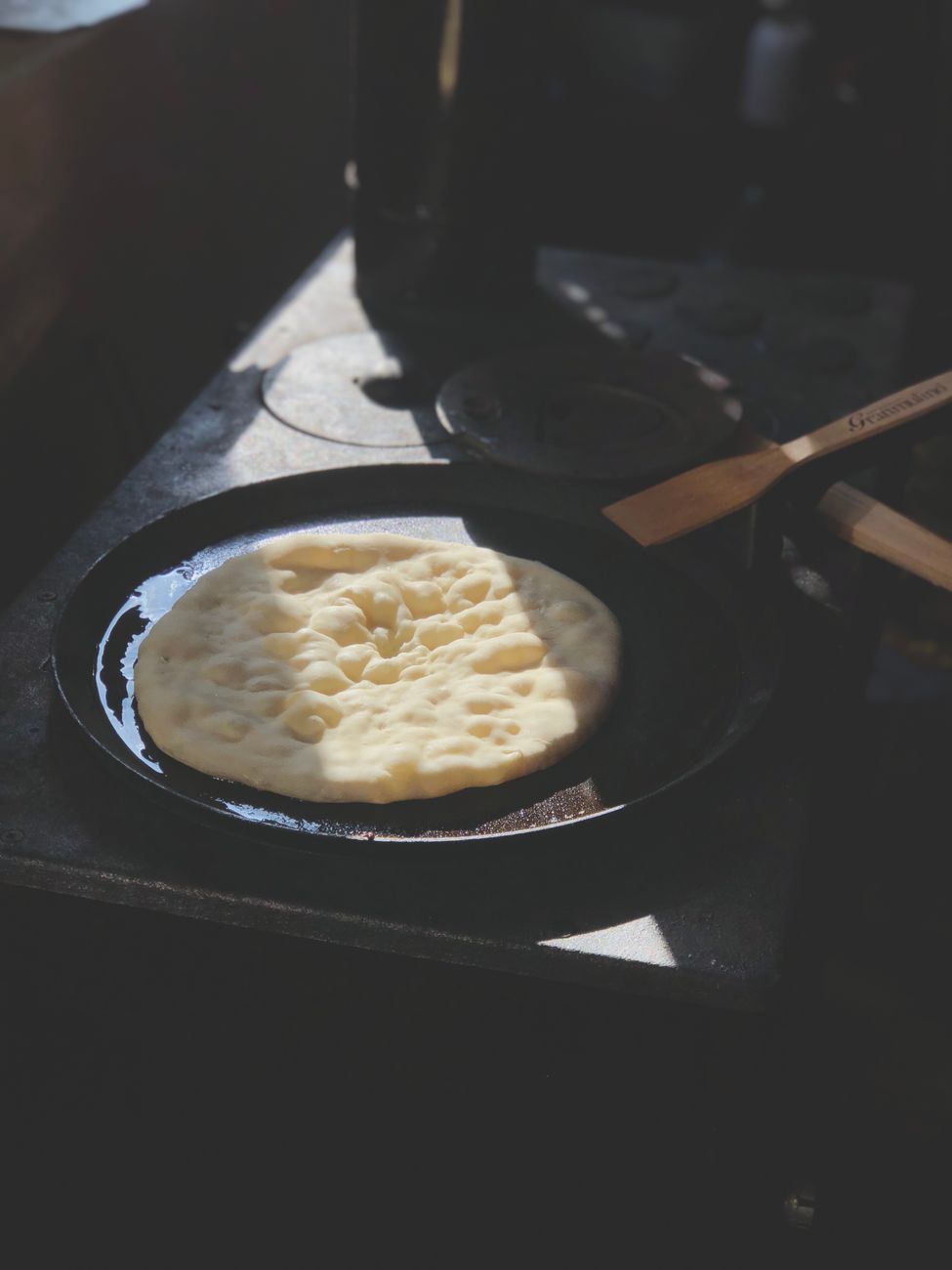
Three skillets at three tiers, each representing a distinct cast iron tradition. The classic Lodge from the case for one good pan is still the best entry; below we recommend a lighter Lodge line, plus two American-made premium options that hand-machine the cooking surface to a smoothness closer to vintage Griswold than to modern sand-cast Lodge.
Entry — Lodge Blacklock 10.25-in, around $60–80
The Blacklock line is Lodge’s answer to the “cast iron is too heavy” complaint that keeps otherwise interested cooks from committing. At 4.2 lbs the Blacklock 10.25-in is 30 percent lighter than the classic 5.5-lb model — same 12mm base thickness, thinner walls, still true cast iron with pre-seasoning applied at the factory. It is our recommendation for cooks who want a premium Lodge (better factory finish than the $30 classic, still made in South Pittsburg, Tennessee) without paying $200+ for a hand-machined pan.
Two honest caveats. First, the lighter weight comes at the cost of heat retention — a 4.2-lb pan crashes 20°F more than a 5.5-lb pan when a cold steak hits it. Second, the Blacklock factory finish is a shade rougher than the Field or Smithey below; you will get to Field-level slickness only after 6–12 months of good use.
Pair it with a $15 chainmail scrubber, a $10 pan brush, and a $15 bottle of grapeseed oil. Total kit under $110 for a pan that will feed you weekly through 2056.
Mid — Field Company No. 8, $225–275
Field Company is the modern brand that revived the pre-1957 American cast iron tradition — sand-cast in Wisconsin, then hand-machined smooth on the cooking surface. The result is closer to a vintage Griswold in feel than to any factory-shipped Lodge. At 4.0 lbs (No. 8, 10.25-in) it is thinner and lighter than a Lodge Classic while retaining excellent heat retention because the base is still 8mm thick. The pre-seasoning is the best in the industry — usable for eggs from day one.
What you are buying: the closest thing on the market to a hand-crafted pre-WWII skillet, made in America, with a lifetime warranty that covers factory defects and — this is the specific detail worth the price — a Field Rehabilitation Service where you can ship the pan back and Field will re-machine and re-season it for $50 plus shipping. This means the pan can survive a rust event, a decade of poor care, or a beginner cook who ruined the seasoning, and still come back mint. No other cast iron brand offers this.
We recommend the No. 8 (10.25-in) as the primary cast iron in a household that will actually cook 3+ times a week for 30 years. Field’s own care method is the “no soap ever” school; follow it strictly for year 1.
Heirloom — Smithey Ironware No. 12, around $240
Smithey, based in Charleston, South Carolina, hand-polishes every skillet on a lathe after casting — producing the mirror-smooth cooking surface that vintage Griswolds and Wagners were famous for and that modern Lodge factory pans miss. The No. 12 (13-in) is the larger heirloom size: enough surface to sear a full 3-lb pork shoulder, roast a 5-lb chicken, or bake two loaves of skillet cornbread at once. It is heavy (7.5 lbs empty), and it is designed to be a primary fixture rather than a specialist tool.
You are paying for: the polished cooking surface (Smithey and Butter Pat are the only two US makers doing this at scale), a hand-forged helper handle on the opposite side for two-hand carrying, a lifetime warranty, and the resale value that will grow with the pan’s patina. A well-maintained Smithey No. 12 has real secondary-market value at year 20 — the used-cookware forums track Smithey and Butter Pat prices the way vintage watch forums track Rolex.
The 12-in is the size we recommend as the only cast iron in an ambitious kitchen that plans to cook whole-animal cuts and multi-loaf batches. For a smaller kitchen, Smithey also makes a No. 10 (12-in, $200) and No. 8 (10-in, $175) — the No. 10 is the sweet spot for households of 2–4.
The 30-year care plan, year by year
Cast iron does not need year-by-year attention — a well-cared-for skillet mostly just gets slicker over time. But the milestones are worth knowing, because they tell you when you can relax about a rule and when you should not.
- Year 0 (out of the box). The factory pre-seasoning gets you started, not finished. First-month cooking is the seasoning-build phase — every meal should have fat, and you should not attempt eggs, delicate fish, or acidic sauces in the pan yet. Wash with hot water only, no soap, chainmail scrubber if needed.
- Year 1 (seasoning matures). The surface is glossy rather than matte, and food releases with less oil than it did on day one. This is the moment you can start using mild soap safely if you prefer the Lodge method. Eggs at year 1 still need a fat coating; by year 2 they release cleanly with just a pat of butter.
- Year 5 (patina hits stride). The seasoning has visible depth — dark, glossy, slightly ridged with the pattern of years of cooking. Acidic foods no longer strip the seasoning meaningfully; you can simmer tomato sauce for an hour without stripping the finish. The pan is now doing 60–70 percent of your cooking work.
- Year 10 (the pan is you). Grip has memorized your hand, the handle has darkened from oil, the surface reads as almost mirror-black. This is the age at which the pan starts showing up in your kitchen photos. Resale value at this point exceeds the original purchase price, which is when the “cast iron is an investment” argument crosses from abstract to literal.
- Year 15–20 (heirloom transfer window). If you have a household member who wants to inherit the pan — a child leaving home, a partner in a divorce settlement, a friend moving in — this is the age at which the pan is worth passing on. A 15-year-seasoned skillet is a fixture no new pan can replicate in less than a decade.
- Year 30 (family artifact). The pan is a household object with more history than most furniture. The seasoning is a physical record of thousands of meals. At this point the pan is not really a pan anymore — it is closer to a wooden spoon that has been used for a century, which is to say a small material presence that pulls decades of memory into the current meal.
The care rules do not change across the timeline — the same five daily habits from §3 apply at year 0 and year 30. What changes is your relationship to the object. In year 1 the pan is a piece of equipment; in year 15 it is an heirloom in progress; in year 30 it is one of the few things in the house that will outlive you.
Rescuing a rusted pan (year-anything protocol)
Sometimes the care plan fails — the pan sits wet in the sink, gets left in a cold garage over winter, or spends a month in storage without oil. When rust appears, the pan is not ruined. Cast iron is one of the most rescuable cookware surfaces in existence. The protocol takes 45 minutes and works even on pans with visible orange rust.
- Scrub the rust off with steel wool or a stiff wire brush. It will look drastic; that is fine. Rust is surface only — the iron underneath is intact.
- Rinse thoroughly, dry on high heat for 5 minutes to drive off all moisture.
- Rub a thin coat of oil (grapeseed or flaxseed) into the entire pan including handle. Wipe with a clean paper towel until the pan looks nearly dry.
- Place upside-down on a baking sheet in a 450°F oven for 1 hour, then let cool in the oven.
- Repeat the oil-and-bake step 3–4 more times if the pan was heavily rusted. Each cycle rebuilds a layer of seasoning.
A pan can survive this rescue at any age — year 3 or year 30. Field’s Rehabilitation Service (see above) is the professional version of this same protocol; do it yourself for a $40 Lodge, ship it back for a $250 Field. A cast iron skillet doesn’t have a total-loss failure mode. You can ruin the seasoning; you cannot ruin the iron.
Living with a well-cared-for skillet
A cast iron skillet that has been maintained for 5+ years changes how the kitchen operates. The pan lives on the stovetop, not in the cabinet — it is too heavy to move casually and too used to store. Grease and oil accumulate on the outside of the handle from a decade of one-handed pours; this darkens the metal into a color no new pan sells. When a friend uses your kitchen for the first time they will ask about the pan. That is the sign.
Living with cast iron alongside one good knife, one good pan, and one good pot — the four-fixture kitchen — means every fixture in daily use gets more attention with age, not less. The knife gets sharpened. The pan gets seasoned. The pot gets re-enameled by Le Creuset’s warranty program if it chips. All four appreciate through use in a way nothing else in the house does. That asymmetry — most objects depreciate, these four appreciate — is the argument for building the kitchen this way.
Frequently asked questions
Do you need to oil your cast iron every time? Yes, after every wash — a thin coat of neutral oil rubbed on with a paper towel while the pan is dry and warm. The oil layer prevents rust between uses and adds micro-layers to the seasoning over years. “Oil every time” does not mean “drench in oil” — the pan should look nearly dry after rubbing, not glossy. Excess oil pools become gummy and attract dust. A skillet oiled with 1/4 teaspoon of grapeseed after every wash builds better seasoning than one drenched once a month.
What should you not clean cast iron with? Avoid: the dishwasher (destroys seasoning and can rust the pan overnight), harsh scouring pads with detergent baked in, oven cleaner or bleach (strips seasoning completely and can pit the iron), cold water on a hot pan (thermal shock can crack cast iron), and prolonged soaking (water penetrates the seasoning into the pores). Chainmail scrubbers, salt scrubs, hot water, and mild soap on year-2+ pans are all fine. When in doubt, less aggressive cleaning is always safer than more.
Is Dawn dish soap safe on cast iron? On year 2+ pans with mature seasoning, yes — a small amount of mild dish soap (Dawn included) will not damage properly polymerized seasoning. On year 1 pans still building initial layers, no — the surfactants penetrate the still-porous polymer and strip developing seasoning. Lodge’s official position is “soap is fine”; Field Company’s is “no soap ever.” Both are defensible; the honest reconciliation is that soap safety depends on seasoning maturity, and year 1 pans should be treated as “no soap” while year 3+ pans can be washed with soap without noticeable effect.
Does cast iron add iron to food? Yes, in small measurable amounts. Cooking acidic foods (tomato sauce, wine reductions, citrus) in cast iron can increase the iron content of the food by 5–10 mg per serving — meaningful for iron-deficient cooks, negligible for most. The transfer happens most in year 0–2 pans where the seasoning is thin; a mature 5-year-old pan transfers less iron because the polymer layer separates food from bare iron more effectively. Cast iron was historically a deliberate iron-supplement source in the 19th century; the modern nutritional case is real but small.
How long does cast iron last with proper care? Indefinitely, in practice. There are cast iron skillets in daily use from the 1880s and 1890s — 130+ year old pans that still work. The iron itself does not degrade; only the seasoning is transient, and the seasoning can be stripped and rebuilt at any age. A pan bought new in 2026 has no biological end-of-life; it will still be a functioning pan in 2126 if someone takes reasonable care of it. This is unique in cookware; no other pan material comes close.
How do I fix a cast iron pan that has rusted? Follow the rescue protocol: scrub the rust off with steel wool or a wire brush (the orange will look scary, the iron is fine), rinse and dry over heat, coat with a thin layer of oil, and bake upside-down at 450°F for 1 hour. Repeat the oil-and-bake cycle 3–4 times for heavy rust. The pan will come back. Field Company offers a paid Rehabilitation Service that does this professionally for their pans; the same protocol works for Lodge, Smithey, or any cast iron brand at home.
Read next
- The case for one good pan — the argument for owning one, before the argument for keeping it 30 years.
- The case for one good knife — the other fixture that improves with age.
- Non-toxic cookware: what the labels actually mean — the chemistry that makes cast iron the safest option by default.
- Affiliate and editorial disclosure — what we earn from what.